By Shannon Bates, RHS Level 2 in Principles of Horticulture, Diploma in Garden Design, and 9 years growing everything from an allotment plot to a community garden.
Seaweed has been used to feed soil and plants for as long as people have gardened near a coast. Farmers on the western edges of Britain and Ireland were spreading it on their fields long before anyone could name a single compound inside it. Today it sits on garden centre shelves in half a dozen forms, and the labels rarely explain the difference between them.
This guide is here to fix that. It covers what seaweed fertiliser actually is, what it does to a plant, the different types you can buy, how to use it, and how to choose the one that suits how you garden. Whether you are feeding a windowsill of houseplants or a full allotment, by the end you will know exactly what you are buying and why.
What's in this guide
- What is seaweed fertiliser?
- What are the benefits of seaweed fertiliser?
- The different types of seaweed fertiliser
- Cold-pressed versus heat-treated seaweed
- How to use seaweed fertiliser
- What you can use it on
- When to apply it
- Seaweed and soil health
- My own experience with seaweed
- What our customers say
- Frequently asked questions

What is seaweed fertiliser?
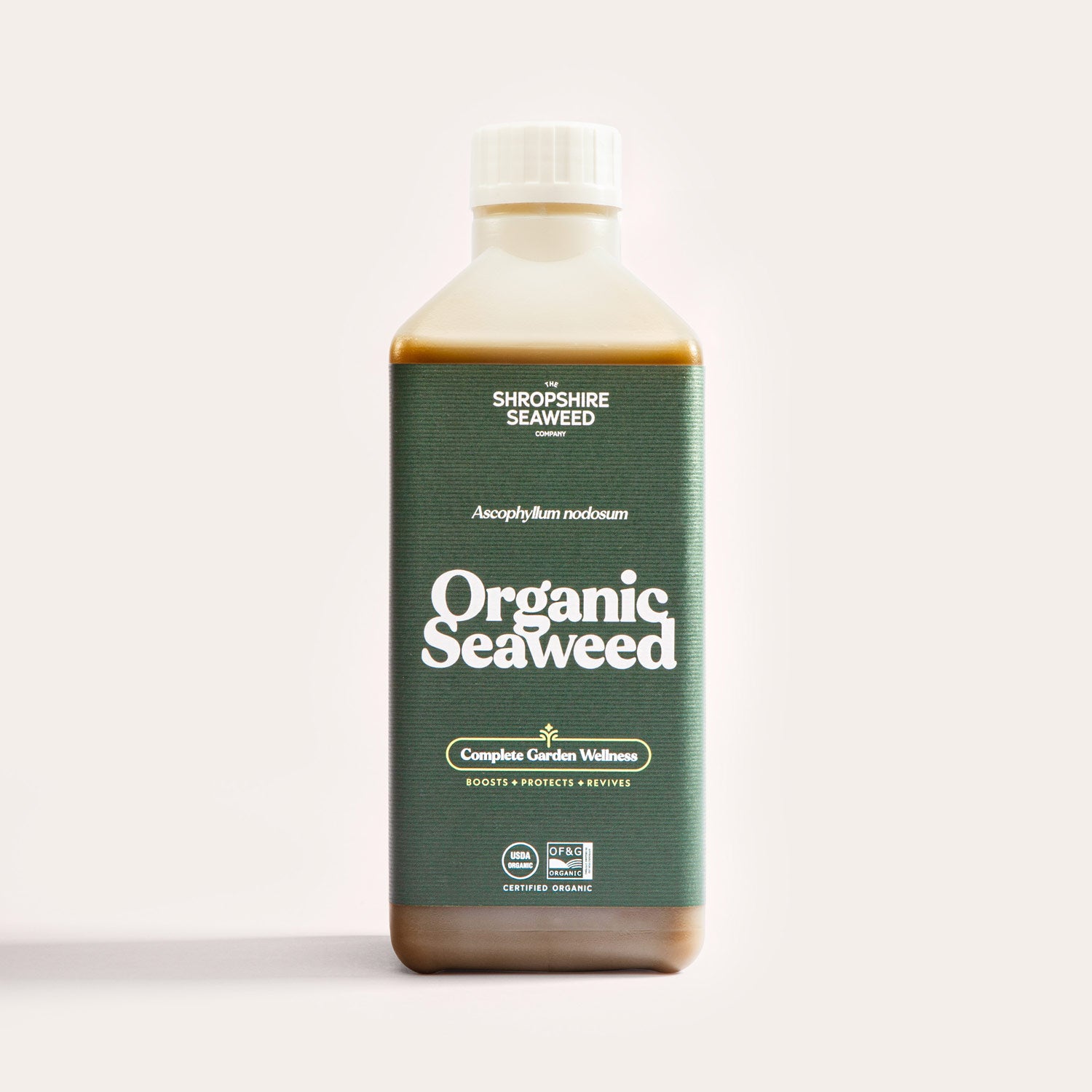
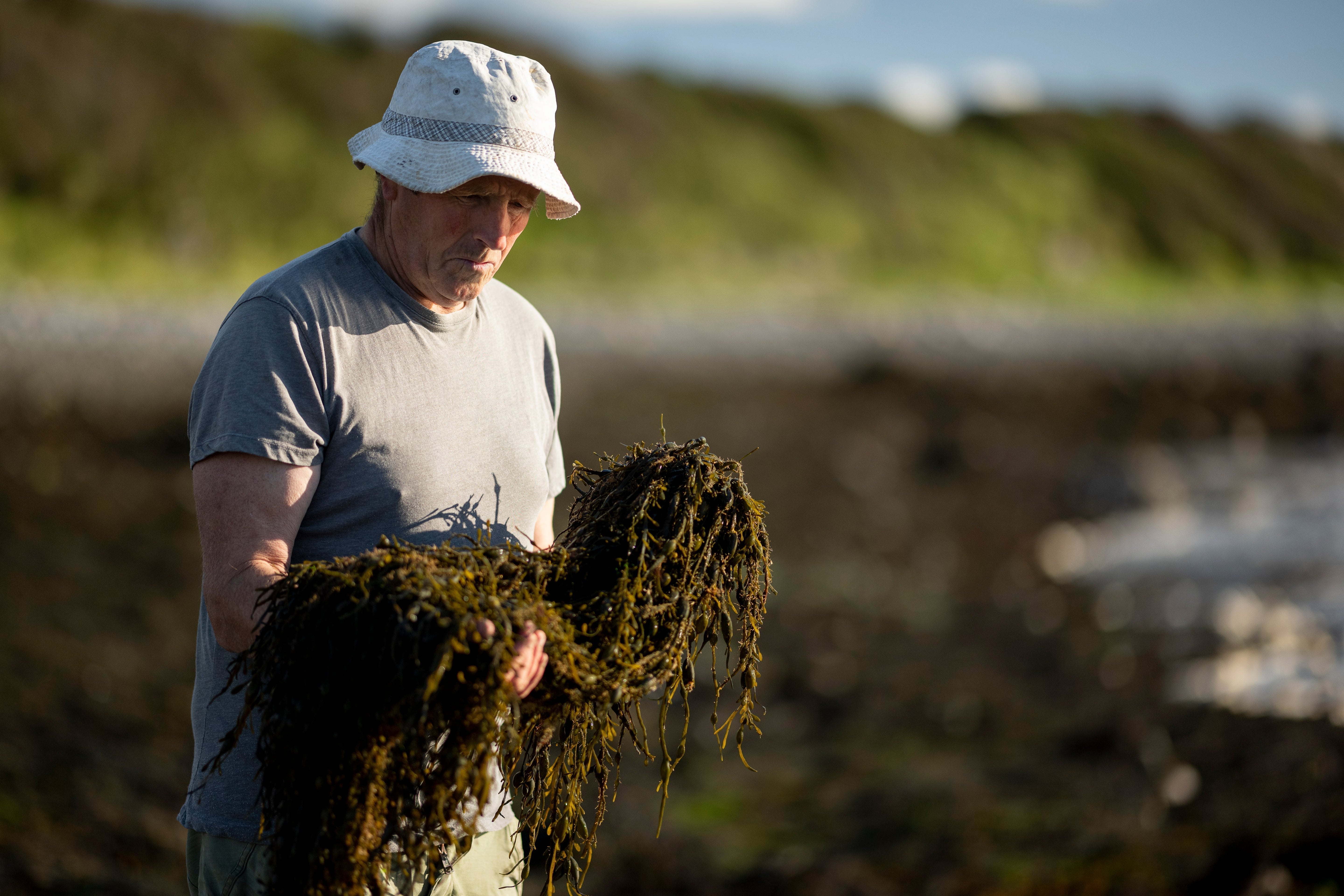
Seaweed fertiliser is a plant feed made from marine seaweed, most commonly a brown seaweed called Ascophyllum nodosum that grows along the cold North Atlantic coast. It can be sold as a dried meal, a powder, or a liquid, and it is used to support plant growth and soil life.
It helps to understand what seaweed fertiliser is not. It is not a high-strength chemical feed built around big numbers of nitrogen, phosphorus and potassium. Its value lies elsewhere. Seaweed is what growers and scientists call a biostimulant: rather than force growth with concentrated nutrients, it works with the plant's own processes, encouraging stronger roots, better nutrient uptake and greater resilience to stress.
Much of that effect comes from the natural plant growth hormones seaweed contains, principally auxins, cytokinins and gibberellins, alongside a broad range of trace minerals, amino acids and complex carbohydrates. These are the compounds that a good seaweed feed delivers to your plants, and, as we will see, the way seaweed is processed decides how many of them survive to reach the soil.

What are the benefits of seaweed fertiliser?
The benefits of seaweed fertiliser are less about a quick green-up and more about the long-term health of the plant and the soil it grows in. In practice, regular use tends to show up in four ways.
Stronger roots. Seaweed's growth hormones, auxins in particular, support root development, which gives a plant a better structure to draw water and nutrients through. A stronger root system is the foundation of a healthier plant.
Better flowering and fruiting. Growers who feed with seaweed often report more flowers and larger, better-tasting fruit and vegetables. One of our customers put it more plainly: "Plants have doubled in size after three uses, fabulous stuff."
Greater resilience to stress. Seaweed helps plants cope with the hard moments of a growing season: heat, drought, cold and the shock of transplanting. Plants tend to recover more quickly rather than stalling.
Living, healthier soil. Seaweed feeds the microbial life in your soil, not only the plant. Over a season that shows up as better structure, more earthworms and improved water retention.
These are not just marketing claims. A substantial body of peer-reviewed research supports the effects of seaweed biostimulants. The foundational review by Khan and colleagues (2009) sets out how seaweed extracts stimulate growth, rooting and stress tolerance across many crops. More recent work focused specifically on Ascophyllum nodosum has traced these effects to the way its compounds interact with a plant's auxin and cytokinin signalling pathways, and to its role in helping plants withstand drought and other stresses. You will find those sources listed at the end of this guide.
One honest caveat, because it matters. Seaweed is a supplement to good growing, not a miracle in a bottle. It works best alongside healthy soil, sensible watering and a decent feeding routine. What it will not do is rescue a plant that is struggling for other reasons.

The different types of seaweed fertiliser
"Seaweed feed" on a label can mean several quite different products. Here is how the main types compare.
|
Type |
What it is |
Best for |
Trade-off |
|---|---|---|---|
|
Seaweed meal |
Dried, ground whole seaweed dug into soil |
Slow-release soil conditioning over months |
Slow to act; needs to break down before plants can use it |
|
Powdered / soluble seaweed |
Dried extract you mix with water |
Convenient storage, easy to post |
Often heavily processed; potency varies widely |
|
Liquid seaweed extract (heat or alkaline processed) |
Seaweed treated with heat or alkali to draw out solubles |
Fast foliar green-up, lawn recovery |
Processing degrades the delicate hormones and enzymes; low seaweed solids |
|
Calcified seaweed |
Ground, mineral-rich coral-like seaweed |
Raising pH and adding minerals to soil |
Not a feed as such; slow and specific in use |
|
Cold-pressed liquid seaweed |
Whole seaweed mechanically pressed without high heat or chemicals |
Whole-plant, whole-season feeding for soil and plants |
Premium product; a considered choice rather than the cheapest |
The single most important line in that table is the difference between processed liquid extracts and cold-pressed seaweed, because two bottles labelled "liquid seaweed" can be worlds apart. That is worth its own section.
Cold-pressed versus heat-treated seaweed
The difference between a seaweed feed that genuinely improves your soil and one that greens up your lawn for a fortnight usually comes down to one thing: how it was processed.
Many liquid products sold as "seaweed feed" are alkaline extracts, sometimes called black seaweed. They are made by treating seaweed with strong alkaline substances such as potassium hydroxide, often with heat. This produces a thin, dark liquid that is cheap to make and easy to spray. It also does two things worth knowing about. It degrades the plant hormones, enzymes and delicate compounds that support flowering and fruiting, and it leaves a low percentage of actual seaweed solids, often only a few percent after processing and dilution.
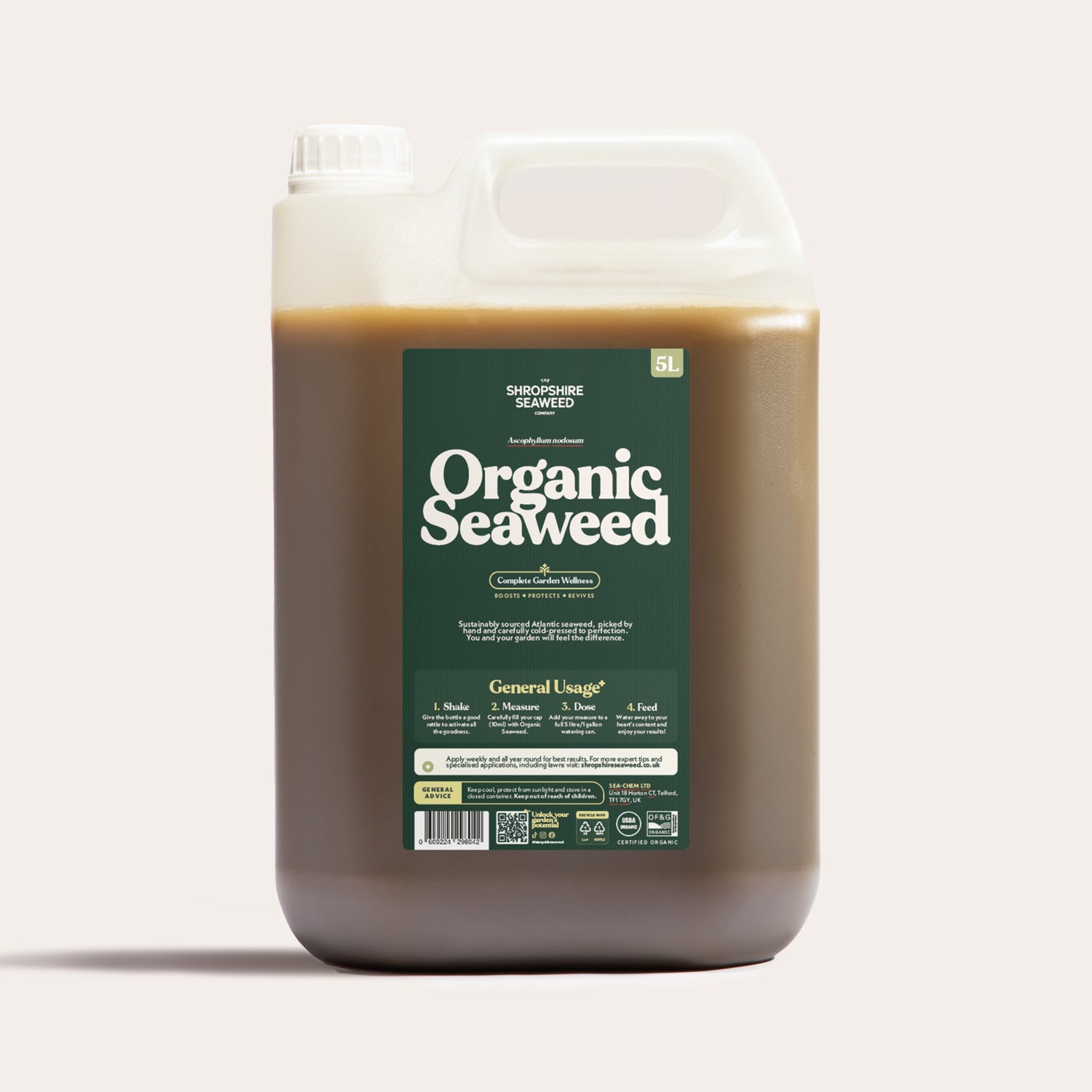
Cold-pressing takes the opposite approach. The seaweed is pressed mechanically, without high heat or harsh chemicals, which preserves the full range of natural compounds the plant responds to. This is why our own flagship feed is 100 percent cold-pressed organic Ascophyllum nodosum, with a high seaweed solids content and nothing stripped out.
This is not to say heat-treated extracts have no use. For a fast green-up on a scorched lawn, or a quick foliar lift on a plant under stress, an alkaline extract can do the job. But for whole-season feeding of soil, roots, flowers and fruit, cold-pressed leads. Usefully, this is not only our view: several research reviews note that a seaweed extract's composition, and the plant's response to it, changes significantly depending on how it was extracted.
There is a practical safety difference too. Because cold-pressed seaweed is gentle and not a concentrated high-NPK feed, it is very hard to over-apply. Go a little over the recommended dilution and you will not scorch roots or burn foliage. More concentrated or chemically processed feeds are far less forgiving: overdo them and you risk fertiliser scorch, the leaf and root burn that comes from too much feed in one go. With cold-pressed, consistency matters more than quantity, so a small dose every week or two does more good than an occasional heavy one.
For a fuller breakdown of the two processes, see our companion piece, Cold Pressed vs Heat Treated Seaweed Fertiliser: What's the Real Difference?

How to use seaweed fertiliser
Seaweed fertiliser is forgiving, which is part of its appeal. There are two main ways to apply a liquid feed, and most gardeners use both across a season.
As a foliar spray. Diluted and sprayed straight onto the leaves, seaweed is absorbed quickly. This is the method to reach for when a plant needs a lift: after transplanting, during a hot or cold spell, or while recovering from pest damage. Apply in the early morning or evening so the leaves do not scorch in strong sun.
As a soil drench. Watered onto the soil from a can, seaweed feeds the roots and the soil life around them. This is the slower, deeper benefit that builds over a season rather than a fortnight.
As a seed soak. Soaking seeds in a weak dilution before sowing can improve germination. Larger seeds can soak for 12 to 24 hours, smaller ones for 2 to 4 hours.
Dilution rates vary by product, so always follow the label. For the exact rates, dosing cap and feeding schedule for our own cold-pressed feed, see the Organic Liquid Seaweed Fertiliser product page, where the full "get the best from your bottle" table lives.

What you can use it on
One of the reasons seaweed is a staple in so many sheds is its range. It is gentle enough for seedlings and useful enough for established trees. Here is how it earns its place across the garden.
Vegetables. Steady feeding through the season supports stronger growth and better cropping on tomatoes, beans, salad leaves, roots and more. As one customer, Graham, wrote: "My pot plants, herbaceous borders, vegetables and greenhouse plants are verdant and productive."
Fruit. Soft fruit and top fruit both respond well. One grower told us it worked "really well for all my plants, especially my raspberries."
Roses and flowering shrubs. Roses in particular respond to a regular seaweed feed with stronger growth and better blooms. Applied as a foliar feed or root drench through the growing season, it also helps them stand up to stress. As one customer told us this season: "I've been using your feed on my garden and I've seen a dramatic improvement in the health of my roses. They're stronger, and your feed is the only change I've made."
Hedging and topiary. Formal plants like box benefit from foliar feeding through the growing season. If you grow buxus, our guide on why buxus plants need special care is worth a read alongside this one.
Ericaceous and lime-hating plants. Acid-loving plants can be tricky to feed well. As one customer found, seaweed "really makes a difference to the difficult ericaceous plants I grow."
Lawns. Seaweed greens up grass and strengthens it from the roots, improving resilience to drought and wear.
Houseplants. Diluted well, seaweed suits even delicate indoor plants. For more on keeping them thriving, see our essential guide to houseplant care.
Which plants don’t like seaweed fertiliser?
Most plants respond well to liquid seaweed. Below are a few rare exceptions.
Carnivorous plants. They shouldn’t be fed at all.
Plants going dormant. Ease off from late autumn, cold-pressed seaweed can be used all year round, but can be sparingly applied in a plant's dormant season.

When to apply it
In most of the UK, seaweed is best used from early spring through to early autumn, when plants are in active growth. A little and often beats an occasional heavy dose.
Spring: as fruit, vegetables and flowers begin active growth and need support to build roots, leaves and shoots.
Summer: through the peak growing and cropping season, to keep plants fuelled for flowers and fruit.
Autumn: reduce frequency as growth slows, from weekly to monthly.
Winter: an occasional feed helps enrich the soil ready for the following season.
Whatever the season, apply in the cool of the morning or evening rather than in full midday sun.
Seaweed and soil health
It is worth saying plainly: seaweed feeds the soil, not only the plant. That is the heart of why it works over the long term. A healthy soil, full of microbial life and good structure, is what lets any feed do its job.
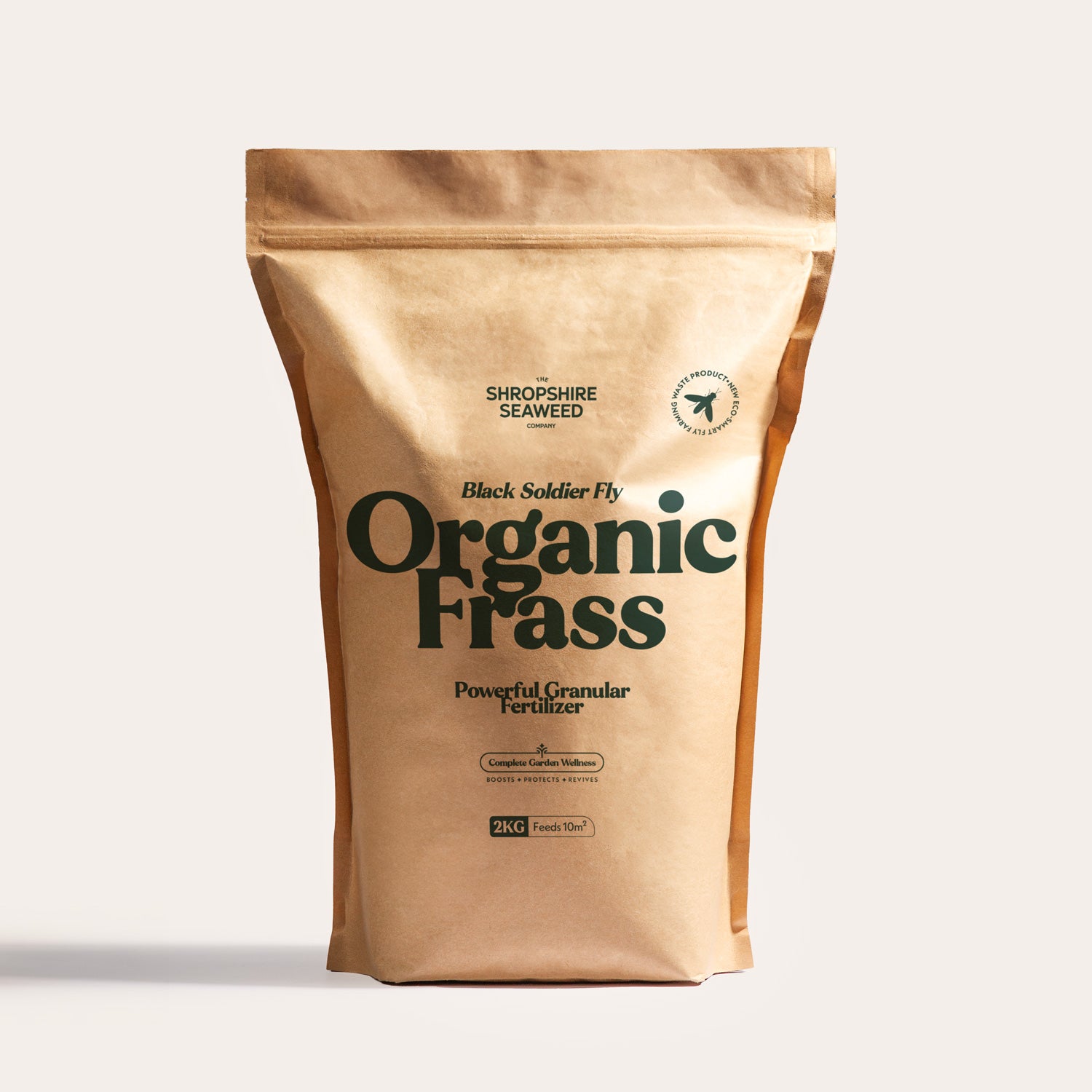
For that reason, seaweed works best as part of a wider approach to soil care, alongside compost, mulch and good practice. Our guide on how to improve your soil naturally covers this in depth. Many growers pair a liquid seaweed feed with a soil improver such as organic frass to feed the soil biology directly, so the two work together.

My own experience with seaweed
I promised to come back to this. In all my years of growing I have tried more than ten different brands of fertiliser, and, honestly, I could never have told you whether any of them made a real difference. I would run trials and dutifully feed my beds through peak season. Yet compared with years I had forgotten to feed at all, I could not see much in it.
When I first tried Shropshire Seaweed, I decided to put it through its paces properly. I grew microgreens with and without feed. I soaked spring seedlings in a dilution. I fed tender plants and kept feeding through the season. At every step, the crops fed with cold-pressed seaweed were visibly stronger, healthier and bigger: better root systems, greener leaves, higher yields. I was genuinely taken aback. Seven months in, I am religious about my feeding routine, and I will not go back to another seaweed feed.
I share that not as a sales pitch but because it changed how I think about feeding plants, and because it is the honest reason this guide exists.

What our customers say
We are rated 4.7 out of 5 from more than 1,000 reviews on Amazon, with a growing set of reviews on Trustpilot too. A few words from customers who garden with it:
"Since using the seaweed solution my house plants are thriving, and my pot plants, herbaceous borders, vegetables and greenhouse plants are verdant and productive. Thank you for a wonderful product."
"For the last four years I have used the Organic Seaweed from Shropshire Seaweed and my garden is thriving. My plants are bigger, healthier, and in wonderful bloom. One of my neighbours asked why we have the greenest lawn in the street, even throughout the drought. Without being melodramatic, this company has saved my garden."
"This plant feed is amazing. All the plants grow so well and look so healthy."
We also love hearing from you. Questions by phone or email are genuinely welcome, and our most loyal customers often help us trial products before they launch.
If this guide has done its job, you now know what seaweed fertiliser does, how the types differ, and how to use it well. If you would like to feed your plants and soil with a cold-pressed organic seaweed that keeps everything nature put into it, our Organic Liquid Seaweed Fertiliser is available in a range of sizes, with free UK delivery over £40.

Frequently asked questions
Is seaweed a good fertiliser, and what does the science say? Yes, though it helps to be clear about how. Seaweed is a biostimulant, so rather than forcing growth with concentrated nutrients it supports a plant's own processes: rooting, nutrient uptake and stress tolerance. A large body of peer-reviewed research, including the foundational review by Khan and colleagues (2009), supports these effects, and later work has traced them to the hormone and signalling activity of Ascophyllum nodosum specifically. It is fair to say results vary between products, which is largely down to how the seaweed was processed.
What is the difference between seaweed meal, liquid extract and cold-pressed seaweed? Seaweed meal is dried, ground seaweed dug into soil for slow release. Liquid extracts are usually made with heat or alkali, which makes them cheap and sprayable but degrades the delicate compounds and leaves a low seaweed content. Cold-pressed liquid seaweed is pressed mechanically without high heat or chemicals, which keeps the full spectrum of hormones, enzymes and nutrients intact. The type you choose depends on whether you want a quick surface feed or long-term soil and plant health.
Is seaweed fertiliser a complete fertiliser, or does it replace NPK feeds? It is best thought of as a biostimulant rather than a complete NPK feed. It is not high in nitrogen, phosphorus and potassium, so it complements rather than replaces a balanced feed for hungry crops. Its role is to improve root health, resilience and soil life, which helps other feeds work better.
Is seaweed fertiliser high in nitrogen?
Liquid seaweed typically contains a moderate amount of nitrogen. Its value largely comes from natural growth hormones, trace minerals and carbohydrates, which help plants use the nutrients already in your soil. For a nitrogen boost, pair it with a richer feed such as frass.
What is Ascophyllum nodosum, and does the species and source matter? Ascophyllum nodosum is a brown seaweed from the cold North Atlantic, recognised as one of the most nutrient-dense seaweeds for horticulture and especially rich in natural growth hormones. Species and source do matter: sustainably hand-harvested Ascophyllum nodosum from cold Atlantic waters retains more biological activity than seaweed bulk-sourced from warmer regions.
Is cold-pressed genuinely better than "black alkaline" extracts? For long-term soil health and plant vitality, yes. Cold-pressing preserves the auxins, cytokinins, gibberellins and enzymes that drive rooting, stress resistance and fruit set, where heat and alkaline processing degrade them. If you only want a quick green-up, a heat-processed extract will manage it. If you want your soil to genuinely improve over a season, cold-pressed is the more considered choice.
Does seaweed fertiliser smell? Cold-pressed seaweed has a mild, natural sea smell, noticeably less pungent than many heat-processed extracts, which can develop a sharp, fermented odour. Once diluted and applied, the smell fades quickly.
Is seaweed fertiliser environmentally sustainable? It can be, when the seaweed is harvested responsibly. Ours is hand-harvested along Ireland's west coast, a traditional practice that protects the resource, and our feed is certified organic by OF&G and USDA, made only from Ascophyllum nodosum with no synthetic additives.
Can you make your own seaweed fertiliser at home? You can steep seaweed in water to make a rough home brew, though it is slow, smells strongly and gives you no control over strength or consistency, and collecting wild seaweed is restricted in many areas. A properly processed feed gives you a reliable, clean and consistent product without the guesswork.
Sources
-
Khan, W. et al. (2009). Seaweed Extracts as Biostimulants of Plant Growth and Development. Journal of Plant Growth Regulation, 28, 386–399. https://link.springer.com/article/10.1007/s00344-009-9103-x
-
Ascophyllum nodosum-Based Biostimulants: Sustainable Applications in Agriculture for the Stimulation of Plant Growth, Stress Tolerance, and Disease Management (2019). Frontiers in Plant Science, 10:655. https://www.frontiersin.org/journals/plant-science/articles/10.3389/fpls.2019.00655/full
-
The plant growth-promoting effect of an Ascophyllum nodosum extract involves salicylic-, auxin- and cytokinin-signalling pathways (2024). Chemical and Biological Technologies in Agriculture. https://chembioagro.springeropen.com/articles/10.1186/s40538-024-00707-5
-
Deolu-Ajayi, A.O. et al. (2022). The power of seaweeds as plant biostimulants to boost crop production under abiotic stress. Plant, Cell & Environment. https://onlinelibrary.wiley.com/doi/abs/10.1111/pce.14391