Most houseplants don't die from neglect. They die from too much of the wrong kind of attention - too much water or a pot that's held them in the same exhausted compost for years. The good news is that once you understand what a plant actually needs and why, the common mistakes become easy to avoid.
Houseplant care comes down to three things done well: water, space, and nutrition. Get those right and you'll have plants that don't just survive on a windowsill but genuinely thrive, growing new leaves, filling out, responding to the seasons the way they were always meant to.
“Houseplants aren't ornaments. They're living things from specific ecosystems, and when you start caring for them on their terms rather than yours, everything gets easier."

1. How to Water Your Houseplants
Water is the most common point of failure. More houseplants are lost to overwatering than to any other cause, and the cruellest part is that an overwatered plant often looks identical to an underwatered one. Wilting, yellowing, drooping leaves can all point in either direction. The difference is in the soil.
Before you water anything, push your finger 2–3cm into the compost. If it feels damp, wait. If it feels dry and crumbly, it's time. That simple check, done every few days rather than on a fixed schedule, is the single most impactful change most houseplant owners can make.
Jamie from @jamiepotsthings says: “I like to use clear nursery pots for my houseplants so I can see the health of the roots and check if the soil is dry deeper in the pot, indicating my plants are ready for a drink.”
Top versus bottom watering
Top watering, pouring slowly onto the soil until water drains from the base, works well for most foliage plants. Always discard any water sitting in saucers or decorative outer pots after 30 minutes - roots left in standing water rot quickly. Bottom watering, placing the pot in a tray of water and letting it draw moisture up from below, suits plants with sensitive leaves and those prone to overwatering, such as orchids. It encourages roots to grow deeper and builds a stronger root system over time.
Seasonal adjustment is everything
A pothos in summer might need water every five days. The same plant in a north-facing room in January might go three weeks without a drink. UK homes in winter combine low light with dry central heating. The air feels dry, which makes plants look thirsty, but the soil usually isn't. Resist the urge to compensate by watering more.
Key points:
- Check soil moisture with your finger before every watering, not the calendar.
- Water until it drains freely from the base, then discard standing water.
- Water significantly less in autumn and winter, this is when most plants are lost.
- Leave tap water overnight, or use collected rainwater for sensitive plants.

2. How to Repot Houseplants
A plant that's been in the same pot for two or more years is almost certainly working harder than it needs to. When roots have colonised every inch of available compost, they can no longer access water or nutrients efficiently. The plant stalls. It might still look healthy for a while, but it's no longer growing the way it could.
The signs that repotting is needed are usually clear once you know what to look for: roots emerging from the drainage holes at the base, water running straight through the pot without being absorbed, or soil that dries out within a day or two of watering. If you ease the plant gently from its pot and see a dense, tightly-wound mass of roots with very little compost left between them, it's overdue.
When to Repot your Houseplants
March to May is the ideal repotting window for most houseplants in the UK. Plants are coming out of winter dormancy and entering active growth, which means they'll establish in fresh compost quickly, regenerate any disturbed roots efficiently, and recover without stress. Repotting in autumn or winter, when plants are dormant, is best avoided unless there's a genuine problem. A dormant plant in a large pot of fresh, moist compost is a recipe for root rot.
Pot size and compost matter
The most common repotting mistake is choosing a pot that's too large. Go up one size only, roughly 2–3cm wider in diameter for most plants. A significantly oversized pot holds a large volume of damp compost around a small root ball, which is exactly the condition that causes root rot. As for the compost itself, a peat-free multi-purpose mix with added perlite and frass works well for most foliage houseplants. Perlite - those small white volcanic granules - improves drainage and prevents compaction. It's the single easiest improvement you can make to any houseplant compost.
Once repotted, water the plant thoroughly and then leave it alone. Move it out of direct sun for a week or two. Some wilting is normal for the first few days - this is the plant reorienting itself, not a sign that something has gone wrong. Look for roots through drainage holes, rapid soil drying, or stalled growth as signs it's time.
Key points:
- Repot in spring (March–May) wherever possible.
- Go up only one pot size — 2–3cm wider — to avoid waterlogging.
- Use peat-free compost with added perlite for most houseplants.
- Don't fertilise for 4–6 weeks after repotting.

3. When and How to Feed Houseplants
Plants make their own food through photosynthesis, but the minerals they draw from the soil are a different matter. In a pot, those minerals are finite. Without a connection to the wider soil ecosystem, nutrients run out. Feeding simply replaces what the plant uses and can't replenish itself.
The timing of feeding matters more than most people realise. The rule is straightforward: feed when plants are actively growing, and stop when they're not. In the UK, active growth broadly runs from March to October, tracking the availability of meaningful daylight. From November through February, most houseplants are in a state of rest, and fertiliser applied during dormancy doesn't get used.
How often and how much
A liquid houseplant feed every two weeks through spring and summer is the right starting point for most foliage houseplants. Always apply after watering, never into dry compost.
Slow-growing plants like snake plants and ZZ plants need far less, every 6–8 weeks is sufficient. Cacti and succulents need nothing at all in winter and a minimal feed only in their active growing months.
What's the best food for houseplants?
An organic formula won't scorch roots or build up to toxic levels the way concentrated synthetic feeds can. A gentle, gradual nutrient release is far more forgiving if you're still finding your rhythm. And the way a feed is made matters: a cold-pressed seaweed keeps its micronutrients and natural growth compounds intact, where heat-extracted products lose much of what made the seaweed worth using.
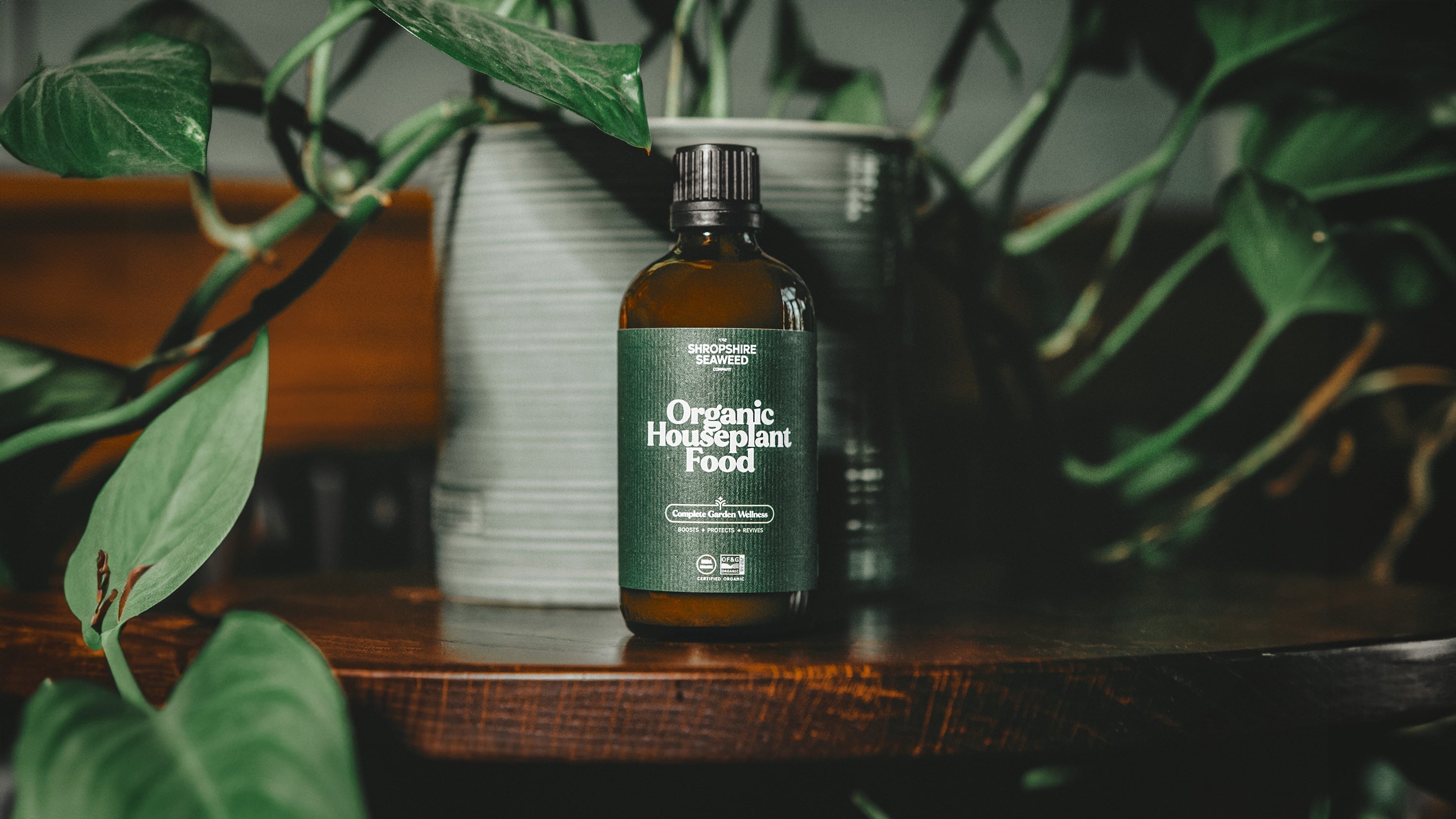
For most homes, a gentle organic liquid feed, such as a cold-pressed seaweed houseplant food, is the most forgiving and reliable option: hard to over-apply, kind to sensitive plants, and supportive of the soil in the pot as well as the plant above it.
Organic feeds and the seaweed difference
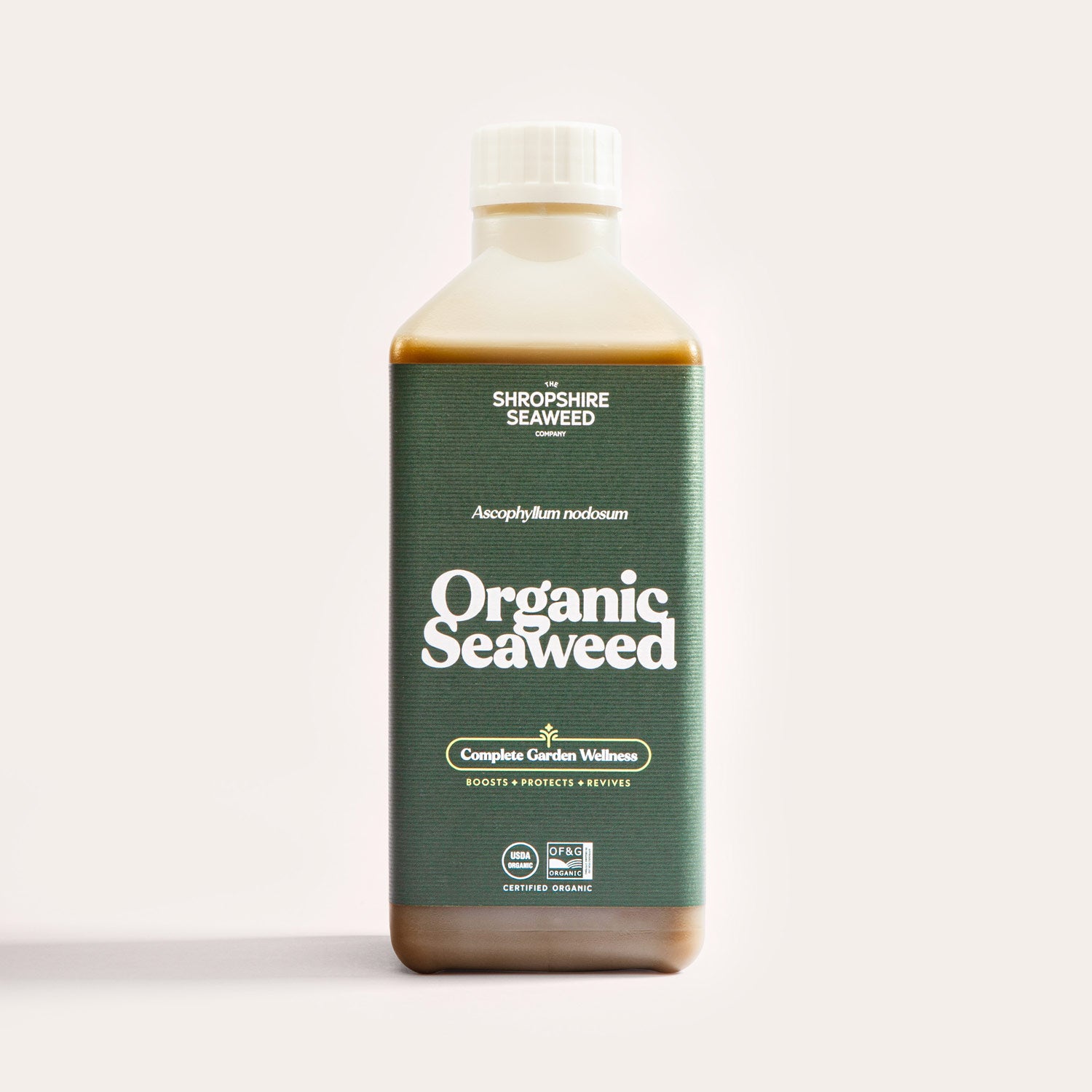
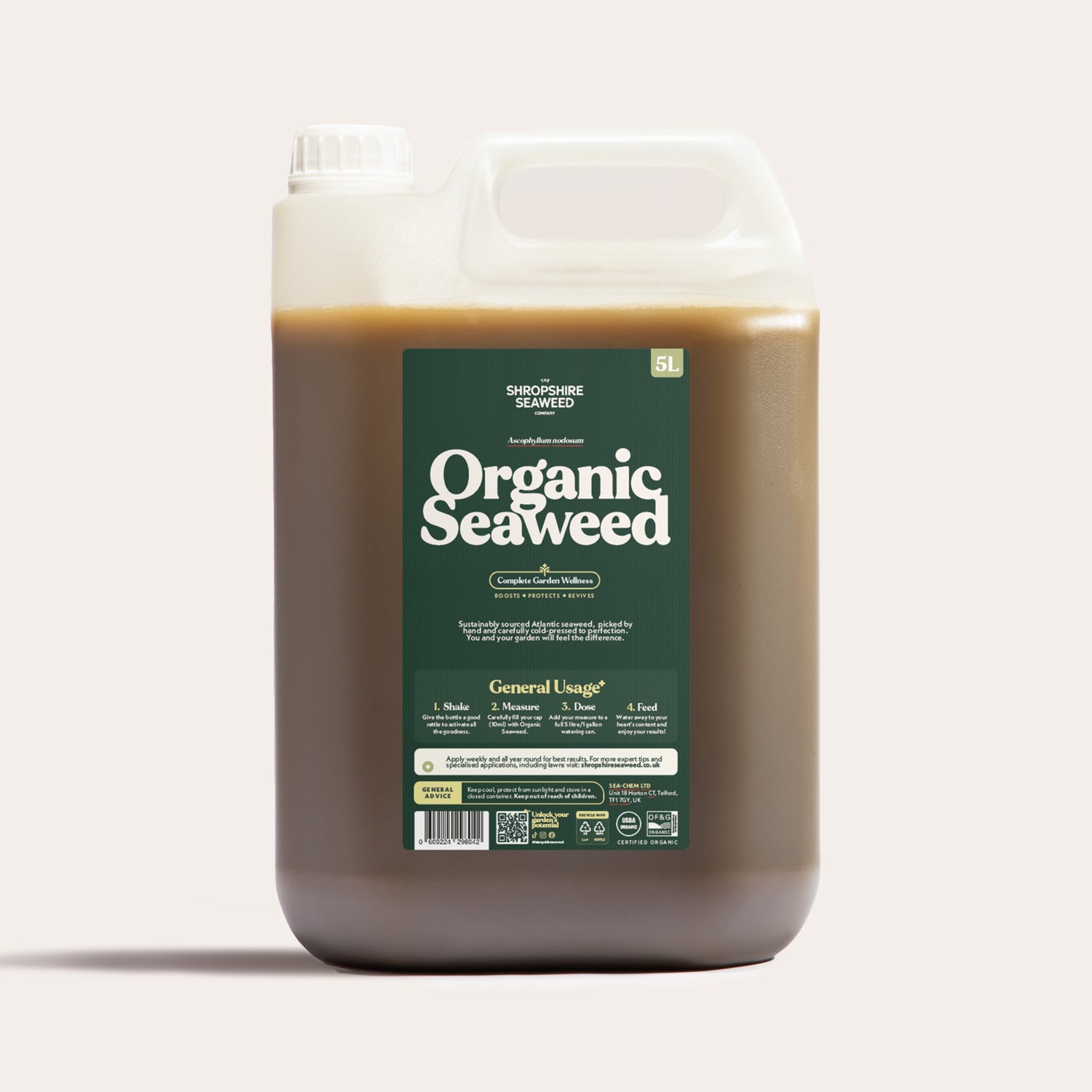
If you're choosing a liquid feed, the extraction method matters more than most product labels make clear. Our houseplant food is cold-pressed from Ascophyllum nodosum seaweed, a process that avoids the heat and harsh extraction used in many fertiliser manufacturing methods. Heat degrades the micronutrients, trace elements and naturally occurring growth compounds that give seaweed its value as a plant food. Cold pressing preserves them intact, which means what you're applying is closer to what the seaweed actually contains.
"The practical effect is gradual and cumulative rather than fast and surface-level: stronger roots, more resilient foliage, and healthier soil over time. It works with a plant's natural growth rhythms rather than pushing it for a quick visible response." Says Stewart Black, Commercial Director at Shropshire Seaweed.
And because it's a considerably natural plant food gentler than concentrated synthetic feeds, it's much harder to over-apply, making it a forgiving choice for anyone still finding their feet with houseplant care, as well as for sensitive plants like orchids and calatheas that react poorly to anything too strong.
Key points:
- Feed from March to October; stop completely in winter.
- Use a liquid feed every two weeks during active growth.
- Apply after watering, never into dry compost.
- Organic feeds, including our cold-pressed seaweed, are gentler and harder to over-apply.
- Never feed after repotting, when stressed, or during dormancy.

4. How Much Light Do Houseplants Need?
Light is the one thing you can't substitute. A plant recovers from a missed feed or a late repot, but without enough light it simply can't photosynthesise, and no amount of watering or feeding makes up for the shortfall. Most houseplants come from the bright, dappled floor of a tropical canopy, which is why a spot near a window, out of harsh midday sun, suits the majority.
South- and west-facing windows give the strongest light and suit succulents, cacti and most flowering plants. East-facing light is gentler and works for the broad middle of foliage houseplants. North-facing rooms are the most challenging, especially through a UK winter, and are best kept for the genuinely shade-tolerant, pothos, snake plants, ZZ plants.
Plants tell you when the light's wrong. Stretched, leggy growth reaching toward the window, small new leaves, or a variegated plant turning plain all mean too little light. Scorched, bleached patches on the leaves facing the glass mean too much. And remember light falls sharply in a UK winter, which is exactly why growth slows and feeding should stop until spring.
Key points:
-
Most houseplants want bright, indirect light, near a window, out of harsh direct sun.
-
Leggy growth and lost variegation signal too little light; scorched patches signal too much.
-
Match the plant to the room: shade-tolerant plants for north-facing spaces.
-
Light drops sharply in winter, the reason growth and feeding both pause.
4. Common Houseplant Pests
Pests are an inevitable part of growing plants indoors. Not a sign of failure, just a reality of bringing living things from tropical and subtropical ecosystems into a home environment. Most infestations are entirely manageable when caught early, and a surprising number are preventable through good soil health before a single insect arrives.
The pests most commonly encountered on houseplants in UK homes tend to be a handful of familiar culprits.
Fungus gnats are the small flies hovering around the soil, the adults are largely harmless but their larvae feed on roots, and they're almost always a symptom of compost that's been kept consistently too wet.
Thrips are slender, fast-moving insects that puncture leaf cells and leave characteristic silver streaking on foliage; they spread quickly and can be persistent.
Aphids cluster on new growth and leaf undersides, weakening plants and secreting a sticky residue that encourages mould.
Spider mites thrive in the warm, dry conditions of centrally-heated UK homes, leaving fine webbing and a dusty, stippled look on leaves.
Mealybugs settle in leaf joints and along stems as white, cottony masses, slow but tenacious, and quick to spread if ignored.
Treatment
For most houseplant pests, a consistent treatment routine matters more than which product you use. Isolate affected plants from the rest of your collection until you're sure the problem has cleared. Nematodes, insecticidal soap, or isopropyl alcohol on a cotton pad all work well on moderate infestations, but the key is applying once a week for three to four weeks to break the breeding cycle and catch any eggs the first application missed.
Building resilience before pests arrive
The most effective pest management starts before you see a single insect. Plants under stress, be it from overwatering, depleted compost, or compacted soil, are more vulnerable to infestation. Healthy plants with strong cell walls and active roots are less attractive to pests and recover faster when attacked.
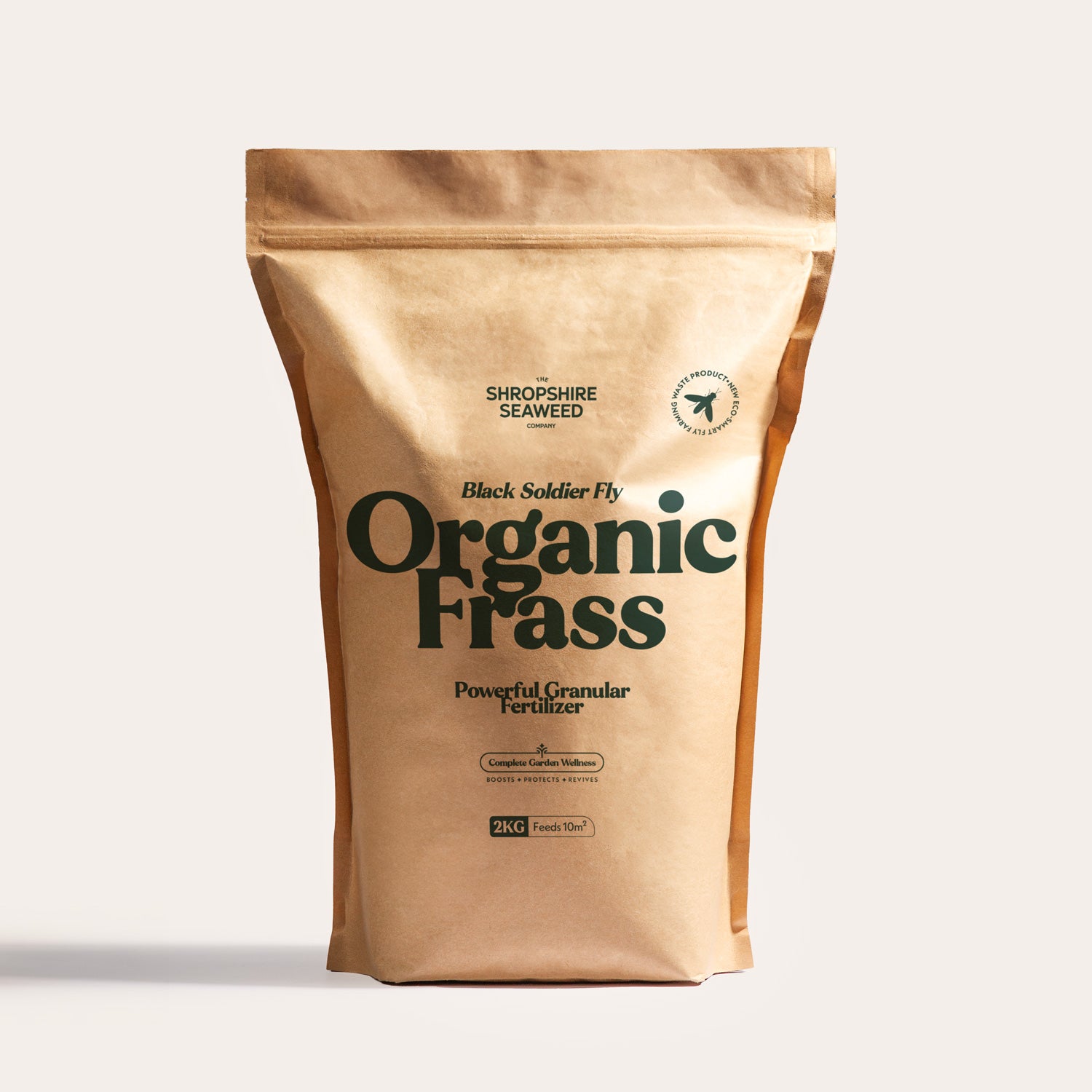
This is where soldier frass offers something genuinely interesting. Frass is the by-product of insect digestion, and it contains chitin - the structural compound found in insect exoskeletons and fungal cell walls. When chitin is present in soil, it activates a plant's natural immune responses: the plant reads chitin as a signal that insects are nearby and upregulates its own defensive chemistry in response. The result is stronger, more resilient tissue that is measurably less susceptible to pest pressure.
Applied as a soil amendment or mixed into compost at repotting, frass supports both the plant and the wider soil ecosystem, feeding the beneficial microbes that healthy compost depends on
Stewart Black, Commercial Director at The Shropshire Seaweed Company says: “We often talk about how beneficial frass is to outdoor plants, and this applies to houseplants too.” .
Key points:
- Check plants weekly, early detection makes treatment far simpler.
- Isolate any affected plant immediately to prevent spread.
- Treat consistently for 3–4 weeks to break the breeding cycle.
- Fungus gnats almost always signal overwatering, address the root cause.
- Add frass to compost at repotting to activate natural plant defences before pests arrive.
The Underlying Principle
Houseplants are extraordinarily forgiving once you understand their rhythms. They slow in winter and accelerate in spring. They signal thirst and nutrient needs through their leaves, their weight, the feel of their soil. The skill in caring for them isn't learning a list of rules, it's learning to pay attention to something alive.
Get the water right, give them room when they need it, feed them through the growing months, and rest them through the dark ones. That's the whole of it.