
By Shannon Bates — Shannon holds an RHS Level 2 in Principles of Horticulture, a Diploma in Garden Design and 9 years of real-world gardening experience spanning from nurturing her own houseplants and allotment plot to running a community garden in her local area.
What is soldier frass?
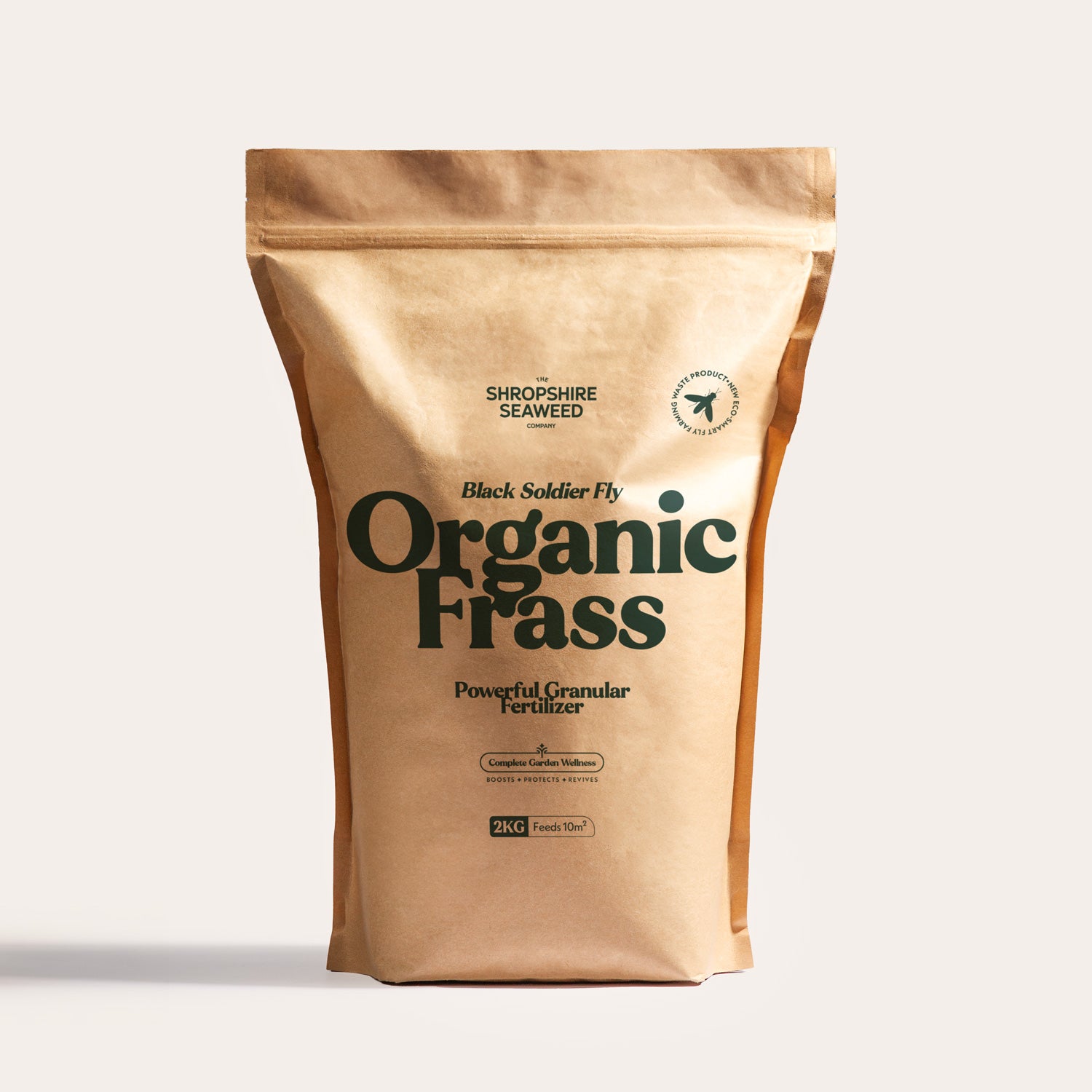
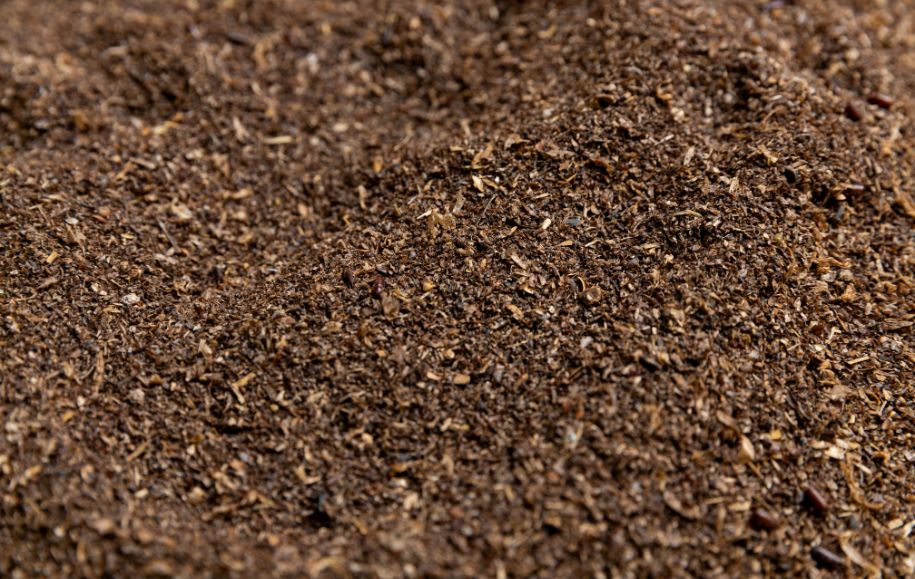
Soldier frass is a by-product of Black Soldier Fly farming. It's what remains after the insects break down plant material; essentially an insect manure, though far less pungent, heavy or unwieldy than the horse or cow manure you might be more familiar with. It's worth noting that frass varies depending on which insect produces it; here, we’re specifically talking about Black Soldier Fly frass, which has a particularly valuable nutrient and biological profile.
What's left behind after the insects have done their work is a nutrient-rich, microbially active material that supports living soil rather than forcing plant growth. It contains a balanced NPK profile for roots, shoots, leaves and flowers; beneficial microorganisms that feed soil biology; and chitin, the compound that makes it genuinely unusual among soil improvers.
Chitin is a natural structural component of insect exoskeletons. When it enters the soil, plants detect it and respond by activating their immune systems, the same mechanism they use when under attack from pests. Think of it like an immunity shot. The result is stronger, more resilient plants that are naturally better equipped to defend themselves. It also appears to have a deterrent effect on slugs and snails, though more on that shortly.
It's certified organic, completely circular, and a zero-waste product of an industry that would otherwise discard it.

Why I started using it
I came to frass looking for a solution to a problem most gardeners know well: poor quality bagged compost. Bagged compost is largely lifeless, uniform and convenient, but lacking the biological activity that makes soil genuinely productive over time. I wanted something that could help rebuild soil biology rather than just temporarily improve it, and frass seemed worth trying.
What I didn't expect was quite how quickly or clearly it would show results.

What I've seen
I've been using frass across my garden in several different ways, and the results have been consistent enough to make it a permanent part of how I grow.
In beds where I applied frass as a soil improver and worked it lightly into the surface, I noticed significantly more soil life within a couple of months: more worms, more insect activity, the kind of biological movement in the soil that signals things are working. During a recent heatwave, a bed treated with a combination of frass, compost and a no-dig approach retained moisture through the worst of the heat and every plant thrived. The neighbouring untreated clay bed, just a few metres away, struggled visibly.
In seedlings, the difference has been even more obvious. Plants raised in a potting mix with frass added have developed root systems roughly double the size of those grown without it, and the plants themselves are noticeably larger and healthier. Strong roots are the foundation of everything above ground, this is where the real value of frass shows up first.

Does frass repel slugs?
In recent months, the conversation around soldier frass has shifted considerably. A video I posted showing a side-by-side comparison from my own garden generated thousands of views, and a surge in questions about whether frass works as a slug repellent.
Here's what the video showed: a courgette plant that had been damaged by slugs. I removed all but one leaf and applied a small handful of frass around the base. Two weeks later, the plant was completely undamaged: except for the one leaf I'd deliberately left exposed. One metre away, a chard plant with no frass around its base had been eaten almost entirely. In the same bed, a second chard plant with frass around its base was untouched. A nearby potted dahlia, also without frass, had been badly eaten.
I've battled slugs for eight to ten years across different gardens and growing spaces, and I've tried nearly everything: upside-down grapefruit skins, coffee grounds, egg shells, copper tape, wool pads. In my community garden, slugs have at times felt like an impossible problem. The things that have genuinely worked for me are raw unprocessed sheep's wool, strulch, nematodes, and now, increasingly, frass.
The reason this works is likely due to the chitin contents. Slugs and snails appear to be sensitive to it, and its presence around plant stems seems to deter them from feeding. But I want to be honest about what I know and what I don't: this is still a live trial. The questions I'm still working through include how frequently it needs reapplying (I'm currently applying a small handful every couple of weeks as a precaution), whether rainfall reduces its effectiveness, and precisely how much is needed. I'll continue to document the results through the season.
What I can say is that the early evidence is compelling, more compelling than anything else I've tried for organic slug control and I am avidly watching to see how effective frass as a slug deterrent is in the long term.

How to use soldier frass
In seed sowing and potting mixes. Add a small handful to your compost when sowing seeds or potting on. It creates a more biologically active growing medium, supports early root development and gives seedlings a more considered start than compost alone.
When planting out. Add a handful into the planting hole before setting a plant in. The frass will be in direct contact with the root zone from the start, supporting establishment and feeding soil life as it breaks down.
As a top dressing. Sprinkle over the surface of beds, lightly rake in and water well. Frass breaks down gradually as soil life processes it, results build over time rather than arriving all at once. Apply at the start of the season and reapply every few months as a natural soil improver.
Around the base of slug-prone plants. Apply a small handful around the base of vulnerable plants, hostas, courgettes, dahlias, chard. Based on current trials, reapply every couple of weeks and after heavy rain.
To refresh spent compost. Old potting compost that's lost its structure and life can be revived rather than discarded. Add a handful of frass along with some biochar soaked in diluted seaweed feed and work it through. The soil improvers will begin rebuilding the biological activity that's been lost.

How frass works alongside seaweed feed and biochar
Frass, biochar and cold-pressed seaweed feed individually are beneficial for the garden, but when used in combination, the improvements in soil and plant are visible.
Why? Frass feeds soil biology: it breaks down relatively quickly, releasing nutrients and microorganisms that support the living system beneath your plants. Biochar acts as a long-term home for those beneficial microbes: its highly porous structure provides habitat that persists in the soil for centuries, meaning the biology frass introduces has somewhere to establish permanently. Seaweed feed works above ground as a regular liquid feed that supports plant health through the growing season. Used together, the three address soil structure, biology and plant nutrition in a way that no single product does alone.

Who is soldier frass for?
Honestly, every gardener can benefit from it. But frass is a product that requires a little more explanation than a liquid feed, it's not yet as familiar as seaweed or compost, and that can make it feel inaccessible if you're newer to growing.
It's particularly well suited to gardeners who are building their soil for the long term, who prefer organic and sustainable inputs, and who want to reduce their reliance on chemical fertilisers and pesticides. It rewards patience: the improvements to soil biology and structure accumulate over seasons, and the garden that uses frass consistently for several years is noticeably more resilient than one that doesn't.

Frequently asked questions
Is soldier frass safe for children and pets? Yes. There are no chemicals, no pesticides, no animal by-products, just insects and the food waste they ate. We'd recommend keeping the bag out of reach of children and dogs, but once it's in the soil, your garden and everyone in it is perfectly safe.
Does frass work in the rain? This is one of the questions I'm actively investigating with my slug trials. Heavy rainfall may reduce its effectiveness as a surface deterrent, so reapplying after significant wet weather is advisable. Its soil-improving properties are unaffected by rain as it breaks down naturally with moisture.
How often should I apply frass around plants for slug protection? Based on current experience: a small handful around the base of each plant, reapplied every two weeks and after heavy rain. This is still a live trial and guidance may evolve as I gather more data through the season.
Is soldier frass the same as regular frass? No, frass varies depending on which insect produces it. This is specifically Black Soldier Fly frass, chosen for its nutrient profile, chitin content and biological activity. It's also distinct from the frass you might find in woodwork (a sign of beetle or caterpillar damage), which is a different substance entirely.
What's the difference between frass and compost? Both improve soil, but in different ways. Compost primarily adds organic matter and structure. Frass adds active biology, beneficial microorganisms, chitin and a slow-release nutrient profile, making it more targeted at building living soil rather than simply amending its texture.
Shropshire Seaweed's organic frass soil improver is available to buy in the UK from our online shop. It works well alongside our biochar and cold-pressed seaweed fertiliser as part of a complete approach to soil health. Free UK shipping on orders over £25.