Organic Frass Soil Improver
Organic Frass Soil Improver
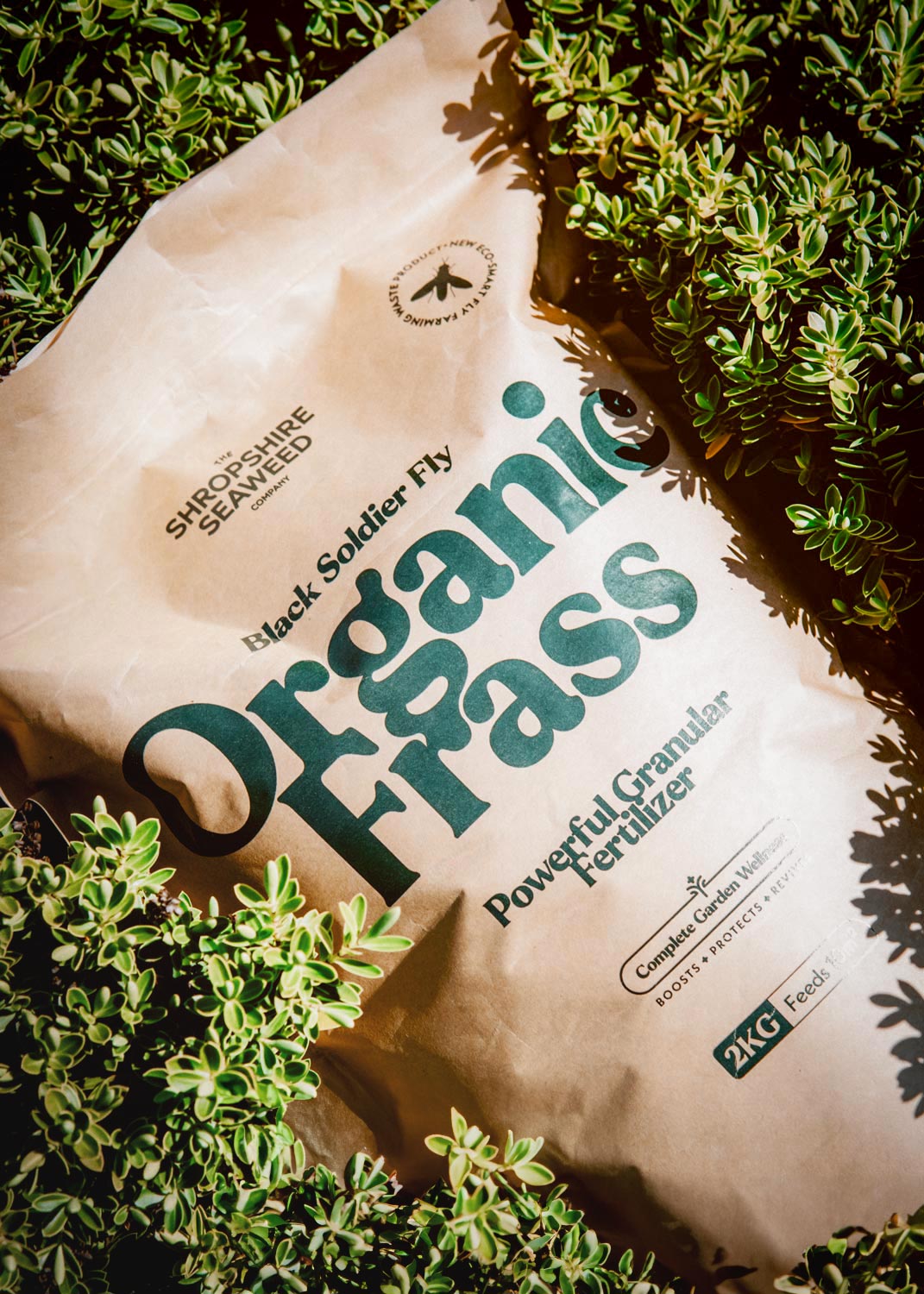
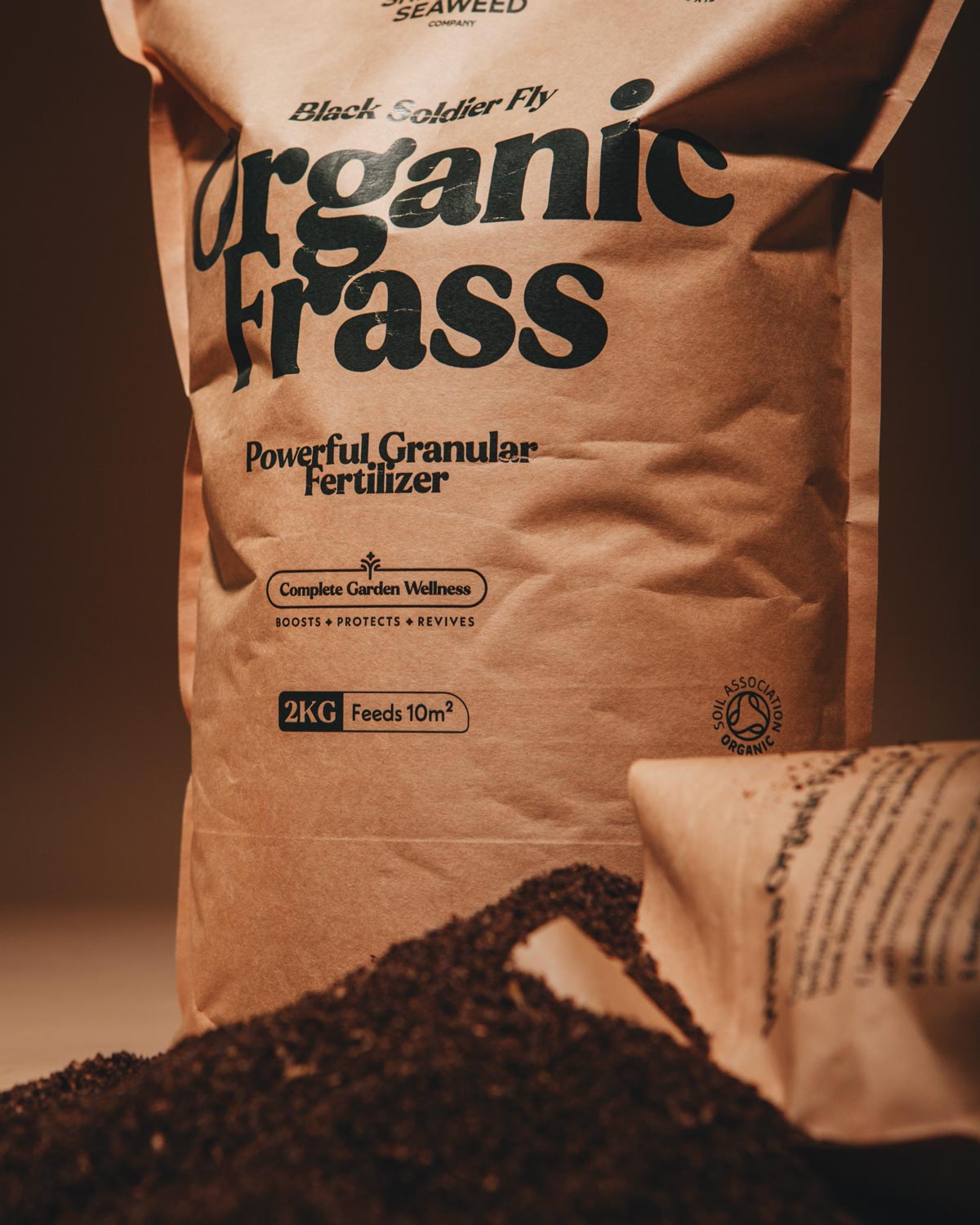
Our organic soldier frass is a gentle but effective soil improver, designed to support soil health from the ground up. Rich in chitin - the natural compound found in insect exoskeletons - it signals to your plants that pests are near, triggering their own immune response and helping them grow stronger and more resilient over time.
Chitin also appears to be naturally off-putting to a wide range of pests, making frass a thoughtful addition around vulnerable plants. Not a quick fix, but part of a garden that learns to look after itself.
Made as part of a circular farming process, soldier frass returns goodness back to the soil, supporting not just plant growth, but the wider ecosystem beneath the surface. Supported by our Cold Pressed Seaweed Fertiliser, these two products support a garden that gets stronger over time.
In stock
What is Frass?
What is Frass?
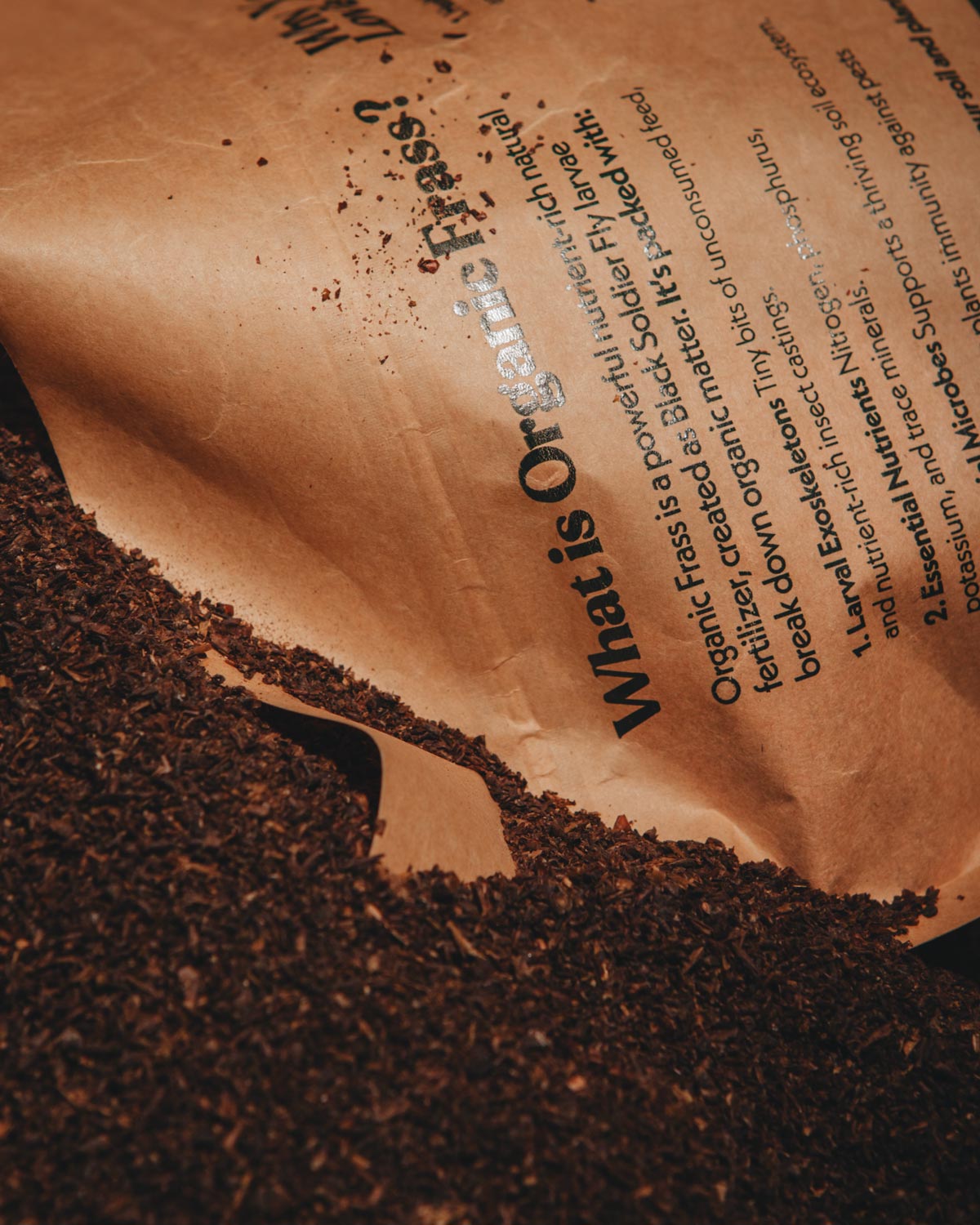
Frass is a natural by-product of insect farming, created as insects feed on plant material. What’s left behind is a nutrient-rich, microbially active material that supports living soil rather than forcing growth.
It is often used by growers who care about long-term soil health, frass acts as a soil conditioner that feeds soil life first, allowing plants to take what they need, when they need it. Healthy gardens start with healthy soil. Organic frass helps improve soil structure and biology, making it easier for plants to establish strong roots and steady growth.
Key Benefits
Key Benefits
Supports growth: a natural fertilizer containing NPK for healthy roots, shoots, leaves and flowers
Slow release: for steady nutrition and growth, perfect for young seedlings and mature plants
Builds resistance: contains chitin for better shields against pests and diseases
Retains moisture: reducing the need for frequent watering
Zero waste: a natural by product of insect farming
When to use
When to use
Organic frass can be used all year round, working with the natural rhythms of your garden.
Spring: Support your plants as they enter their active growth stage by improving your soil with frass.
Summer: Provide a continual energy boost throughout the season to promote growth of new roots, leaves and flowers.
Autumn: Maintain soil health and help plants build resilience as growth begins to slow.
Winter: Add frass to beds or compost bins to improve soil structure and add nutrients for the following season.
How to use
How to use
For beds and borders: Sprinkle over your soil to give plants a natural nutrient boost.
For seedlings: Mix with compost/potting soil for healthier seedlings and stronger roots.
For lawns: Scatter over your lawn and water in.
For flowers and vegetables: Side-dress veggies and flowers to keep them thriving all season long.
For fruit trees and shrubs: Scatter around the base of the plants for a nutrient boost.
Want to know exactly how much to use and when? Learn how to use our organic frass fertilizer in your garden, find more info below.
Share this product


Why Your Garden Needs Our Organic Frass Fertilizer?
Healthy soil means happy plants! Our Organic Frass Fertilizer is packed with natural nutrients, beneficial microbes, and chitin, which strengthens plant immunity and improves soil health. It slowly releases essential minerals, helping your garden grow stronger, greener, and more productive, whether you're feeding veggies, flowers, lawns, or fruit trees. Plus, it’s eco-friendly, making it the perfect sustainable boost for your soil. Give your garden the nourishment it deserves!
How to Use Organic Frass Fertilizer in Your Garden
Organic Frass Fertilizer is an easy-to-use, nutrient-rich organic fertilizer that works wonders for lawns, plants, vegetables, and more. Follow these simple instructions for best results year round!
Lawns
Lawns
Application Rate: 200g per m²
How Often:
- Spring & Summer: Every 6-8 weeks for lush, green growth.
- Autumn: Apply before the first frost to strengthen roots.
- Winter: No application needed (lawns go dormant).
How to Apply:
- Sprinkle evenly over the lawn.
- Water in well to activate nutrients.
- For patch repair, mix 1 part frass + 3 parts soil + grass seed and spread over bare spots.
Seedlings & Young Plants
Seedlings & Young Plants
Application Rate: Mix 10-20% frass into potting soil
How Often:
- Apply and mix with soil at planting, then lightly top-dress every 4 weeks.
How to Apply:
- Mix frass with compost or soil before planting.
- For potted plants, add a light sprinkle on the surface and water in.
Planting Beds & Flower Borders
Planting Beds & Flower Borders
Application Rate: 200g per m²
How Often:
- Spring & Summer: Every 6-8 weeks for continuous flowering.
- Autumn: Apply before winter to feed soil microbes.
- Winter: No application needed.
How to Apply:
- Spread frass over the soil surface.
- Lightly rake in and water well.
Vegetable Beds
Vegetable Beds
Application Rate: 200-300g per m²
How Often:
- Spring: Before planting to boost soil fertility.
- Summer: Every 4-6 weeks during peak growing season.
- Autumn: After harvesting to enrich soil for next year.
- Winter: Apply lightly if growing winter crops.
How to Apply:
- Work into the top layer of soil before planting.
- Side-dress around growing plants and water in.
Fruit Trees & Shrubs
Fruit Trees & Shrubs
Application Rate: 100-200g per small tree,
300-500g per large tree.
How Often:
- Spring & Autumn: Apply twice per year for best results.
How to Apply:
- Sprinkle around the base of the tree.
- Lightly rake into the soil and water well.
Compost Booster
Compost Booster
Application Rate: 50g to 100g per compost layer.
How Often: Every time you add fresh waste
How to Apply: Mix into your compost pile to accelerate decomposition and improve microbial activity.
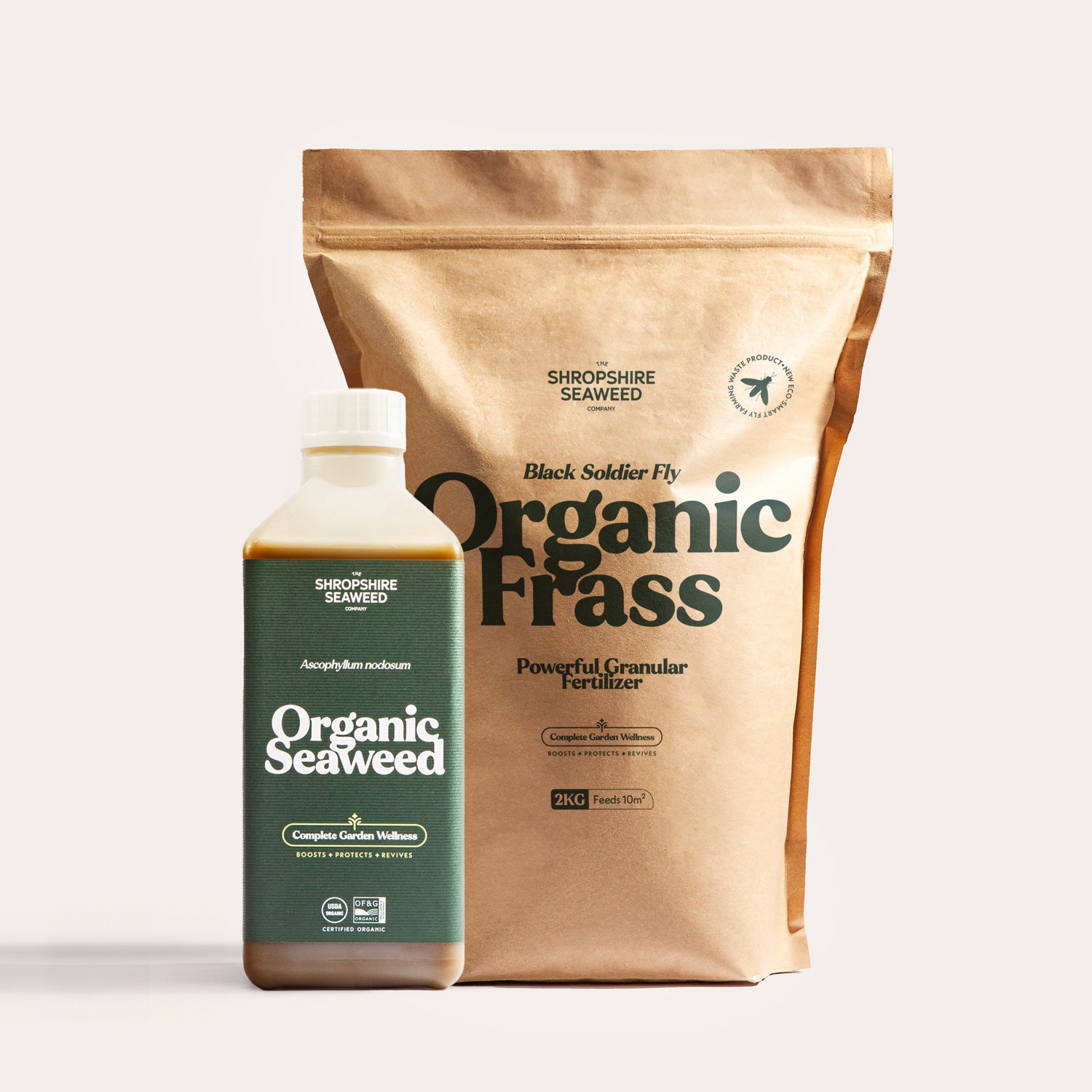
The Perfect Duo: Organic Frass Fertilizer & Organic Seaweed
For the healthiest and most vibrant garden, pair The Shropshire Seaweed Company's Organic Frass Fertilizer with our Organic Seaweed!
Here’s why they work so well together:
- Frass builds long-term soil health: Packed with slow-release nutrients, beneficial microbes, and chitin for stronger plants.
- Seaweed gives an instant boost: Full of growth hormones, trace minerals, and natural plant stimulants for quick results.
- Better resilience: Together, they improve root strength, boost immunity, and help plants fight pests, disease, and extreme weather.
- Balanced feeding: Frass enriches the soil structure, while seaweed keeps plants energised through every season.
Use them together for thriving veggies, lush lawns, and stunning flowers, all year round.
FAQs
What is soldier frass?
What is soldier frass?
It's the nutrient-rich by-product left behind by black soldier fly larvae as they break down food waste. Think of it as nature's recycling, a crumbly, earthy soil food made up of insect castings, shed larval skins and tiny traces of the plants the larvae ate.
What does soldier frass do for my soil?
What does soldier frass do for my soil?
It feeds the whole system, not just the plant. Frass delivers a gentle, balanced dose of nitrogen, phosphorus and potassium, while waking up the microbes, fungi and tiny life that make healthy soil actually work. Better structure, better water-holding, better growing.
What's chitin, and why should gardeners care?
What's chitin, and why should gardeners care?
Chitin is the material insect exoskeletons are made of. When it hits the soil, it signals to your plants that pests are nearby, nudging them to switch on their own natural defences. Stronger plants, grown the way nature intended.
Can I use it on seedlings, edibles and houseplants?
Can I use it on seedlings, edibles and houseplants?
Yes. Frass is mild enough that it won't scorch tender roots on seedlings, edibles or houseplants. Use a light scatter and work into the soil, or sprinkle and watered in.
Is it safe around children, pets and wildlife?
Is it safe around children, pets and wildlife?
Yes. There are no chemicals, no pesticides, no animal by-products, just insects and the food waste they ate. We'd still say keep the bag out of reach of children and dogs, but once it's in the soil, your garden and everyone in it is perfectly safe.
Does frass stop slugs?
Does frass stop slugs?
Honestly? We don't know. There's chatter online about frass deterring pests thanks to its chitin content, but we haven't tested it against slugs ourselves, and we're not going to make a claim we can't stand behind. If you try it, we'd love to hear how you get on.
Journals